
Blog
The Rainforest After Dark Experience
The Magical and Mysterious World of the Nighttime Jungle
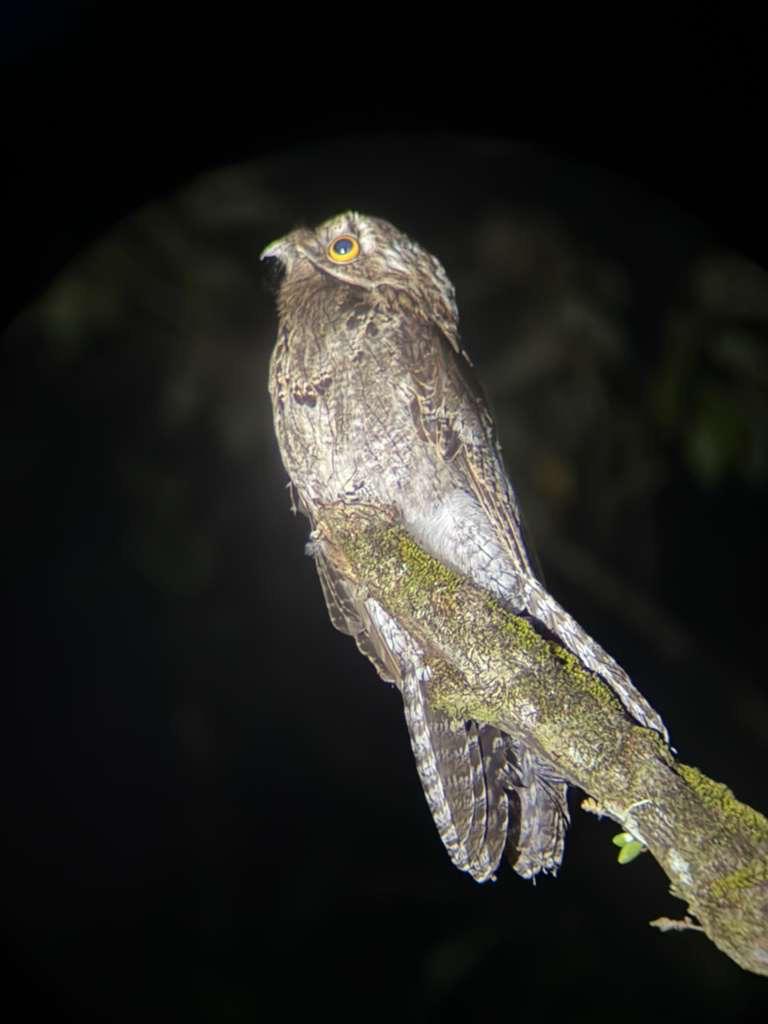
With its lush vegetation and myriad animals lurking behind any given corner, the idea of the jungle fills the imagination with images that are exciting for some and terrifying for others. This is particularly true when the sun goes down and the whole scene changes into a dark mysterious world. The jungle, or rainforest to be more accurate, transitions into an enchanted realm, and for those who don't succumb to their fears, a night tour provides an intimate glimpse of the strange and wonderful creatures that come out under the cover of darkness.
There is a large and diverse cast of characters that appear only at night. One of which is a cute animal, with an equally cute name — the kinkajou. Described by many as looking like a cross between cat, bear, and monkey, it moves around the canopy at night in search of fruits to eat. They supplement their mostly frugivorous diet with insects, small vertebrates, and also nectar, which they extract by using their long, Gene Simmons–like tongues to get to the base of the flowers that bloom at night. By doing this, they get pollen on their faces and inadvertently act as pollinators for these plants.
One of the more iconic animals that can be seen at night is the red-eyed tree frog. I refer to them as the unofficial poster boy of Costa Rica, since they often adorn advertisements, due to their striking appearance. The bright red eyes serve as protection in two ways. First, bright colors in the animal kingdom often communicate toxins (think of poison dart frogs or coral snakes), and even though the red-eyed tree frogs are not poisonous, animals will think twice about attacking them. The other way in which the colors help is through "startle colorization." This is when an animal suddenly, without warning, reveals its bright colors, throwing the would-be predator off guard and allowing the animal time to escape. This is particularly useful when the frog is sleeping and suddenly opens its eyes. Blue morpho butterflies also use this defensive technique when they open their folded wings to reveal the iridescent blue colorization on the top of their wings.
These are only some of the many fascinating animals that can only be seen by venturing into the nighttime rainforest. While hiking in the jungle in the dark may sound intimidating to many, it is extremely unlikely that the animals in the rainforest will bother humans. Even snakes, the most likely creature to cause harm, will almost always choose "flight" over "fight" when encountering a human. The times in which people get bitten by snakes are usually when they catch them by surprise and the snake feels that striking is the only recourse to defend itself. An example of this is when someone steps over a log, not realizing that there is a snake curled up on the other side, with nowhere to go. Of course it is important to take precautions: stay on marked trails, wear boots, check the other sides of logs before stepping over them. However, far more dangerous than any animal are falling trees or branches. This is why it is best to avoid hiking in the jungle in a thunderstorm or in high winds.
Overall, while there are risks involved in any activity, night hikes present minimal exposure to potentially dangerous situations, especially when precautions are taken. On the flip side, they offer an opportunity for everyone — young, old, single, or family — to be awed and truly appreciate another side of the tropical rainforest. So venture out into the unknown and discover the wonders and mysteries of the rainforest after dark.